Tuesday, February 13, 2007

Pope Benedict's 2007 Lenten Message is Released


MESSAGE OF HIS HOLINESS
BENEDICT XVI
FOR LENT 2007

“They shall look on Him
whom they have pierced”
(Jn 19:37)

Dear Brothers and Sisters!

They shall look on Him whom they have pierced” (Jn 19:37). This is the biblical theme that this year guides our Lenten reflection. Lent is a favourable time to learn to stay with Mary and John, the beloved disciple, close to Him who on the Cross, consummated for all mankind the sacrifice of His life (cf. Jn 19:25). With a more fervent participation let us direct our gaze, therefore, in this time of penance and prayer, at Christ crucified who, dying on Calvary, revealed fully for us the love of God. In the Encyclical Deus caritas est, I dwelt upon this theme of love, highlighting its two fundamental forms: agape and eros.

God’s love: agape and eros

The term agape, which appears many times in the New Testament, indicates the self-giving love of one who looks exclusively for the good of the other. The word eros, on the other hand, denotes the love of one who desires to possess what he or she lacks and yearns for union with the beloved. The love with which God surrounds us is undoubtedly agape. Indeed, can man give to God some good that He does not already possess? All that the human creature is and has is divine gift. It is the creature then, who is in need of God in everything. But God’s love is also eros. In the Old Testament, the Creator of the universe manifests toward the people whom He has chosen as His own a predilection that transcends every human motivation. The prophet Hosea expresses this divine passion with daring images such as the love of a man for an adulterous woman (cf. 3:1-3). For his part, Ezekiel, speaking of God’s relationship with the people of Israel, is not afraid to use strong and passionate language (cf. 16:1-22). These biblical texts indicate that eros is part of God’s very heart: the Almighty awaits the “yes” of His creatures as a young bridegroom that of his bride. Unfortunately, from its very origins, mankind, seduced by the lies of the Evil One, rejected God’s love in the illusion of a self-sufficiency that is impossible (cf. Gn 3:1-7). Turning in on himself, Adam withdrew from that source of life who is God Himself, and became the first of “those who through fear of death were subject to lifelong bondage” (Heb 2:15). God, however, did not give up. On the contrary, man’s “no” was the decisive impulse that moved Him to manifest His love in all of its redeeming strength.

The Cross reveals the fullness of God’s love

It is in the mystery of the Cross that the overwhelming power of the heavenly Father’s mercy is revealed in all of its fullness. In order to win back the love of His creature, He accepted to pay a very high price: the blood of His only begotten Son. Death, which for the first Adam was an extreme sign of loneliness and powerlessness, was thus transformed in the supreme act of love and freedom of the new Adam. One could very well assert, therefore, together with Saint Maximus the Confessor, that Christ “died, if one could say so, divinely, because He died freely” (Ambigua, 91, 1956). On the Cross, God’s eros for us is made manifest. Eros is indeed – as Pseudo-Dionysius expresses it – that force “that does not allow the lover to remain in himself but moves him to become one with the beloved” (De divinis nominibus, IV, 13: PG 3, 712). Is there more “mad eros” (N. Cabasilas, Vita in Cristo, 648) than that which led the Son of God to make Himself one with us even to the point of suffering as His own the consequences of our offences?

“Him whom they have pierced”

Dear brothers and sisters, let us look at Christ pierced in the Cross! He is the unsurpassing revelation of God’s love, a love in which eros and agape, far from being opposed, enlighten each other. On the Cross, it is God Himself who begs the love of His creature: He is thirsty for the love of every one of us. The Apostle Thomas recognized Jesus as “Lord and God” when he put his hand into the wound of His side........ (continue reading at the Vatican's website)


Hat Tip to Fr Z for this news, and for his commentary. Do go there and read it.

Monday, February 12, 2007

Call to Holiness April 28 - Reserve your ticket today!

The Call to Holiness poster and ticket info is available online.

This year, Call to Holiness will be at two locations on the same day, with speakers commuting bewteen the sites to enable all to hear them at the closest location.

Follow this link to the Call to Holiness website for a PDF file of the poster
, which has ticket info (give it a moment to load).

Speakers this year include:

- Robert Fastiggi, PhD (Sacred Heart Major Seminary)
- Marcus Grodi (EWTN - Journey Home)
- Alice von Hildebrand, PhD
- Fr. Neil Roy, S.T.L., PhD

Keynote Speaker: Bishop Fabian Bruskewitz of Lincoln, NE

New Auxiliary Bishop, Daniel Flores, will celebrate Mass at 8:00am at Our Lady of Mt. Carmel in Wyandotte. Auxiliary Bishop John Quinn will celebrate Mass at 4:00pm at St. Rene Goupil on the East side.

Sunday, February 11, 2007

Web-cam live from Lourdes


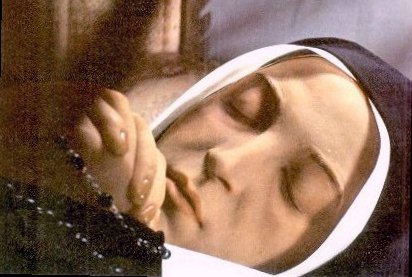
St. Bernadette (d. April 16, 1879) today - one of the "incorruptibles"


February 11th marks the anniversary of the first apparition at Lourdes, France by St. Bernadette. One of the things I wish I had thought to do was to direct your attention to the many webcams at the Official Website of Lourdes-France, which is in my sidebar (scroll down on the main blog page).

There are webcams right now, as of this posting, showing people processing in the streets of Lourdes, and at the Grotto with candlelight.

Access them through this page

More on the Lourdes Apparitions:

Video


Great book on Saint Bernadette, written in 1958


Saint Bernadette Soubirous by Abbe Francois Trochu

Saturday, February 10, 2007

Abp. Wuerl and his pastoral letter on Sacramental Confession

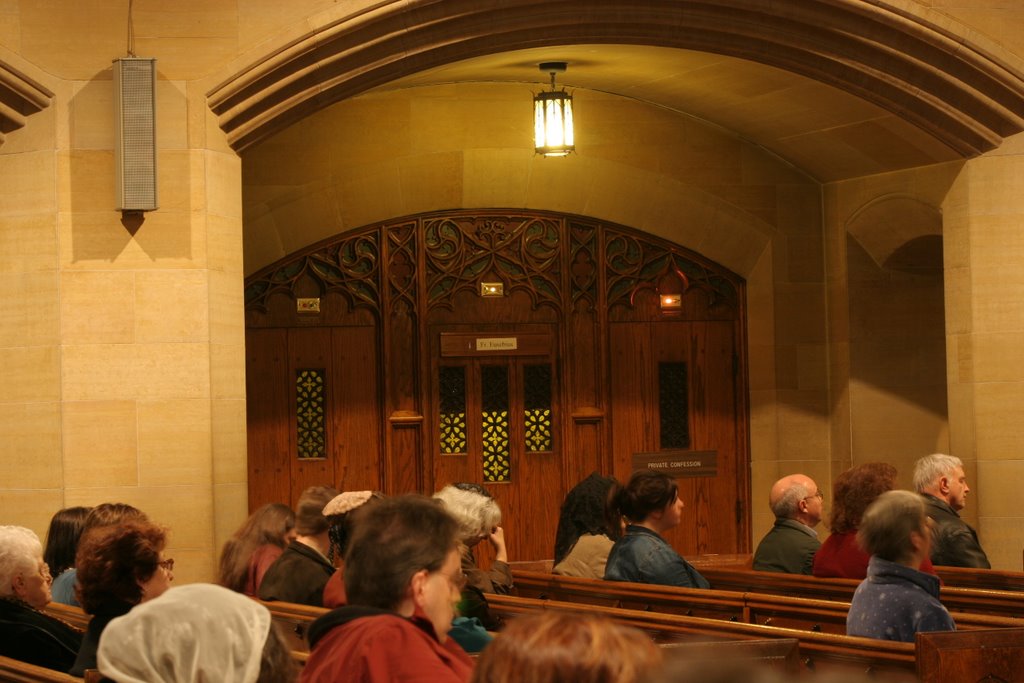
A photo of a well-used confessional at Assumption Grotto on a Sunday morning as Mass gets underway. Assumption Grotto Confession Schedule: Saturday, Eve of Holy Day, Thursday before First Friday: 2:30-3:30 & 7:30-8:00 p.m.Sunday: 45 min. before the 9:30 a.m. and Noon Mass until the Gospel starts and any time in between if you just ask!


The Archbishop of Washington DC., Donald Wuerl, has written a most powerful pastoral letter on Sacramental Confession.

This is long overdo and I am very greatful to see it, even though I've not yet read it. Hat-tip to CWNews where I picked it up. Unfortunately, today it is by subscription only that you can read their article on it.

However, here is the actual document:

God's Mercy and the Sacrament of Penance - A pastoral letter to clergy, religious and the laity.

I hope to be reading it over the next few days.

I will post thoughts on the content then.

Deo Gratias!

Sacred Signs by Romano Guardini: Standing


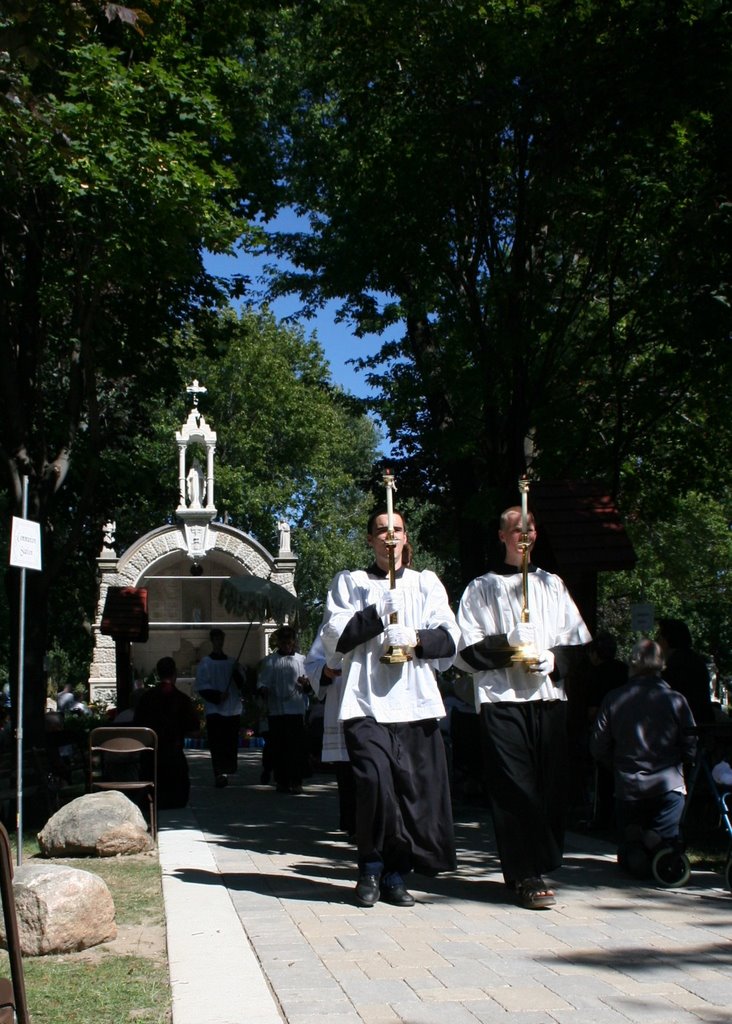
Grotto altar boys and the faithful stand as they venerate the Blessed Virgin Mary on the Feast of the Assumption

STANDING

from "Sacred Signs" by Romano Guardini, c 1956
via the EWTN online Library


THE respect we owe to the infinite God requires of us a bearing suited to such a presence. The sense that we have of the greatness of His being, and, in His eyes, of the slightness of our own, is shown outwardly by our kneeling down to make ourselves small. But reverence has another way of expressing itself. When you are sitting down to rest or chat, and someone to whom you owe respect comes in and turns to speak to you, at once you stand up and remain standing so long as he is speaking and you are answering him. Why do we do this?

In the first place to stand up means that we are in possession of ourselves. Instead of sitting relaxed and at ease we take hold of ourselves; we stand, as it were, at attention, geared and ready for action. A man on his feet can come or go at once. He can take an order on the instant, or carry out an assignment the moment he is shown what is wanted.

Standing is the other side of reverence toward God. Kneeling is the side of worship in rest and quietness; standing is the side of vigilance and action. It is the respect of the servant in attendance, of the soldier on duty.

When the good news of the gospel is proclaimed, we stand up. Godparents stand when in the child's place they make the solemn profession of faith; children when they renew these promises at their first communion. Bridegroom and bride stand when they bind themselves at the altar to be faithful to their marriage vow. On these and the like occasions we stand up.

Even when we are praying alone, to pray standing may more forcibly express our inward state. The early Christians stood by preference. The "Orante," in the familiar catacomb representation, stands in her long flowing robes of a woman of rank and prays with outstretched hands, in perfect freedom, perfect obedience, quietly attending to the word, and in readiness to perform it with joy.

We may feel at times a sort of constraint in kneeling. One feels freer standing up, and in that case standing is the right position. But stand up straight: not leaning, both feet on the ground, the knees firm, not slackly bent, upright, in control. Prayer made thus is both free and obedient, both reverent and serviceable.


************


Note that Romano Guardini isn't suggesting that standing replace kneeling. He differentiates between appropriate times to kneel and appropriate times to stand. One must read both of his meditations - kneeling and standing - to get full context.


There are times for standing, even in prayer. Within the Liturgy of the hours that we stand, such as when we pray the Magnificat during Vespers.

One comment I would like to make is that about how we should stand when praying. It is something I learned fairly quick after discovering Assumption Grotto. I noticed that people stood straight - not slumped. They did not lean on one leg or the other. Just as Romano Guardini suggests - for the most part, all stand upright with feet planted firmly on the floor evenly.


I recognized this because I wanted to do as I had done all of my life in Church: lean on one leg or the other, hands in pockets, etc. But, I felt out of place doing this and it wasn't that anyone was glaring at me. It just seemed irreverent to stand in that manner after witnessing an entire congregation in a comfortable, reverent stance. It took a few months for me to not lean on one leg or the other.


Attention to such small details for me, ended up being a grace - which acted upon, enabled me to experience the Mass much better. Working on distractions is a lifetime effort.


Consider yourself on a job interview and standing in front of a potential boss. Body language says alot. Therefore, we should consider our body language before Our Lord and Creator.


Reverent is, as reverent does!


Thursday, February 8, 2007

Fr. Z on St. Josephine Bakhita


Today is the memorial of St. Josephine Bakhita. I only became aware of this saint a couple of weeks ago and was amazed with her, even with what little I had to go on. I'm glad to see Fr. Zuhlsdorf has a full post on her, well worth reading.

This statement she made is something we all need to meditate on: Accepting God's will for us. It's been said that God can turn any and all bad things into something good and for his glory. Here we see her acknowledging his work. The slave trade was indeed a bad and wicked thing. But the graces of God worked within this soul who in life learned to give him glory, and in afterlife gives him glory.

"If I were to meet the slave-traders who kidnapped me and even those who tortured me, I would kneel and kiss their hands, for if that did not happen, I would not be a Christian and Religious today…"

Catholic-Forums.com has a good write-up on her, as well.

Tuesday, February 6, 2007

More News on "Pro Multis"....

The Tablet (UK) is carrying an article written by Bishop Donald Trautman (head of the USCCB's committee on liturgy - BCL) in which he criticizes the Vatican's decision to translate "pro multis" to "for many" - a change from the "for all" to which we have grown accustomed to hearing.

Fr. Zuhlsdorf responds. Go to Fr. Z's blog for his response and Bishop Trautman's original speech, including a link to The Tablet article.

I'm rather disappointed, but not surprised, to see a US Bishop publicly criticizing the Holy See on a matter which has been spelled out in writing in Prot. n. 467/05/L by His Eminence, Francis Cardinal Arinze. It's very unfortuante that the opportunity to speak publicly was not used for catechesis as the Prefect points out in bullet "d" within that document:

3. There are, however, many arguments in favour of a more precise rendering of the traditional formula pro multis:

a. The Synoptic Gospels (Mt 26,28; Mk 14,24) make specific reference to "many" (pollvn) for whom the Lord is offering the Sacrifice, and this wording has been emphasized by some biblical scholars in connection with the words of the prophet Isaiah (53, 11-12). It would have been entirely possible in the Gospel texts to have said "for all" (for example, cf. Luke 12,41); instead, the formula given in the institution narrative is "for many", and the words have been faithfully translated thus in most modern biblical versions.

b. The Roman Rite in Latin has always said pro multis and never pro omnibus in the consecration of the chalice.

c. The anaphoras of the various Oriental Rites, whether in Greek, Syriac, Armenian, the Slavic languages, etc., contain the verbal equivalent of the Latin pro multis in their respective languages.

d. "For many" is a faithful translation of pro multis, whereas "for all" is rather an explanation of the sort that belongs properly to catechesis.


Related posts:

The Great News: It's pro multis!
Vatican speaks: Pro multis = for many
More on Vatican's decision regarding pro multis

Saturday, February 3, 2007

Vocations: Religious Family of the Incarnate Word


I like to profile traditional religious orders that are Eucharistic, Marian, and in communion with the Holy See - for those searching for such communities. Communities which lean towards more new age, or a strictly social focus, imho, tend to be doctrinally challenged. All it takes is to challenge one Church teaching and the community is out of focus. Mother Teresa proved to the world that one can be devout, Marian and Eucharistic while serving the poor. In fact, without those things, she would be the first to say that had she worked around the clock, she would never have accomplished what the grace of God aided her with by her devotion.

Reader Javier in Argentina has sent me several links on the Religious Family of the Incarnate Word. While it originated in Argentina, they have provinces in other countries, including the US and Canada, among others. In the US, the Province of the Immaculate Conception has a website that is available in English and in Spanish.

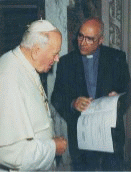
Like other emerging traditional orders, this was recently founded - appropriately, on March 25, 1984. Like the other communities I've been profiling, the only apparent vocation "crisis" is that they are booming with young people. Their founder is the Rev Carlos Buena, who is the Superior General of the clerical branch. Pictured at left is the founder with Pope John Paul II.

There are three branches as outlined in the above link:
Institute of the Incarnate Word - the clerical branch of priests. This branch also includes brothers, and there is a contemplative arm of priests and brothers, as well. There are three houses of formation here in the US: The Bishop Sheen Residence (you gotta like that name) in Chillum, MD; St. Isaac Jogues Novitiate, Mount Rainier, MD; and, the Pontifical College Josephinum in Columbus, OH. I had difficulty linking so go to the home page and click on "Houses of Formation")


Servants of the Lord and of the Virgin of Matara (SSVM) is made up of active and contemplative nuns. Here you see sisters gathered from the numerous countries from which they come. They too have a province in the US of the same name. Click around this website for a real treat.


Here you see their habit and you can read more on these sisters in their "about" page.


The apostolic sisters are visiting the contemplative sisters of the "Edith Stein Community" in Brooklyn, NY.


Finally, the Family of the Incarnate Word has is a Third Order.

NATURE AND OBJECTIVE

The Third Order of our Religious Family of the Incarnate Word is an Association of the Faithful whose Members, living in the world, desire to participate in our spirit. For this reason, this Secular Association commits itself to form with the Members of this Religious Family, a unique family united by the same faith, goals, charism, and spirit. The Third Order is an essential part of our Religious Family because it is a prolongation of our works in their own environment.

Something else that may be of interest to all is that they have a retreat center, and make available the Spiritual Exercises of St. Ignatius. They don't have their 2007 calendar up yet, but keep checking or contact them should you desire to to go.

If you are in the Secular branch or are familiar with these priests and sisters, feel free to discuss your experiences in the comment box.

Friday, February 2, 2007

Novena to Our Lady of Lourdes: February 2 - 11

Statue of Our Lady of Lourdes at Assumption Grotto


I just wanted to slip this in here after stumbling across it at the Assumption Grotto website. They will be doing the Novena to Our Lady of Lourdes after all Masses from today through the 11th.

You can pray it even if you can't make it to Mass. There are several versions of it online.

I'll supply you with two versions of the novena:
The Confraternity has a wonderful Rosary site if you have not yet visited. I have previously profiled it here.

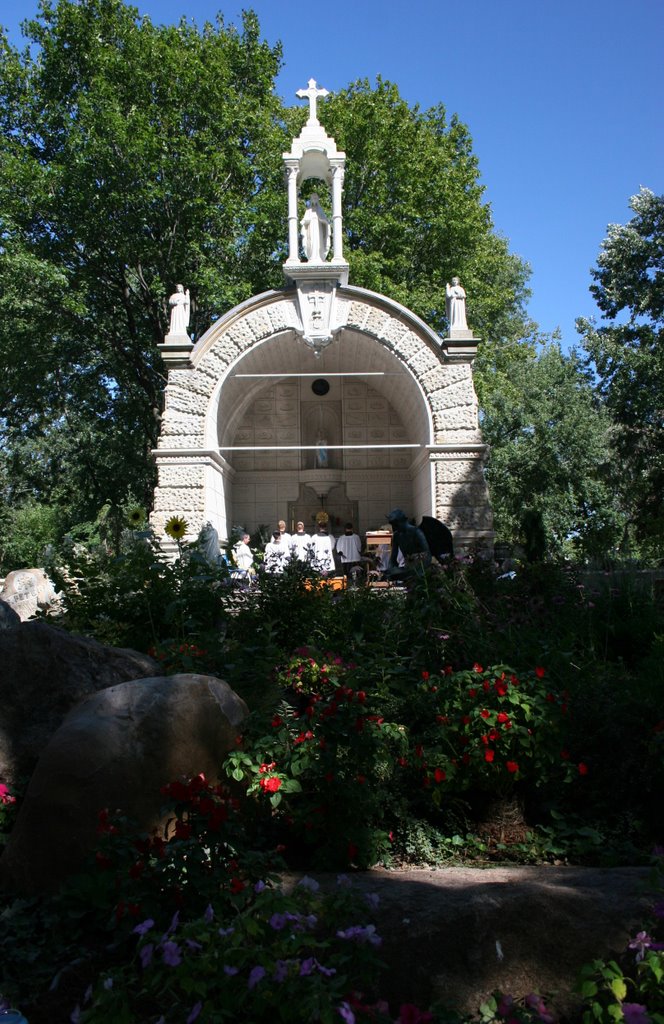
Here are a few more pics from Assumption Grotto taken on August 15, 2006. For those unfamiliar with this parish, there is a cemetary behind the Church and in the cemetary was built a Grotto in the late 1800's after the pastor at that time (can't quote exact year), had visited Lourdes and was impressed to build this center for devotion here in Southeast, Michigan. We have a parish historian and I hope to bring you some of the fine work she has done, along with photos of the parish taken long ago. This is our 175th and I would like honor it first by sharing the story of how my parish ended up with a Grotto in honor of the Blessed Mother at Lourdes, France.


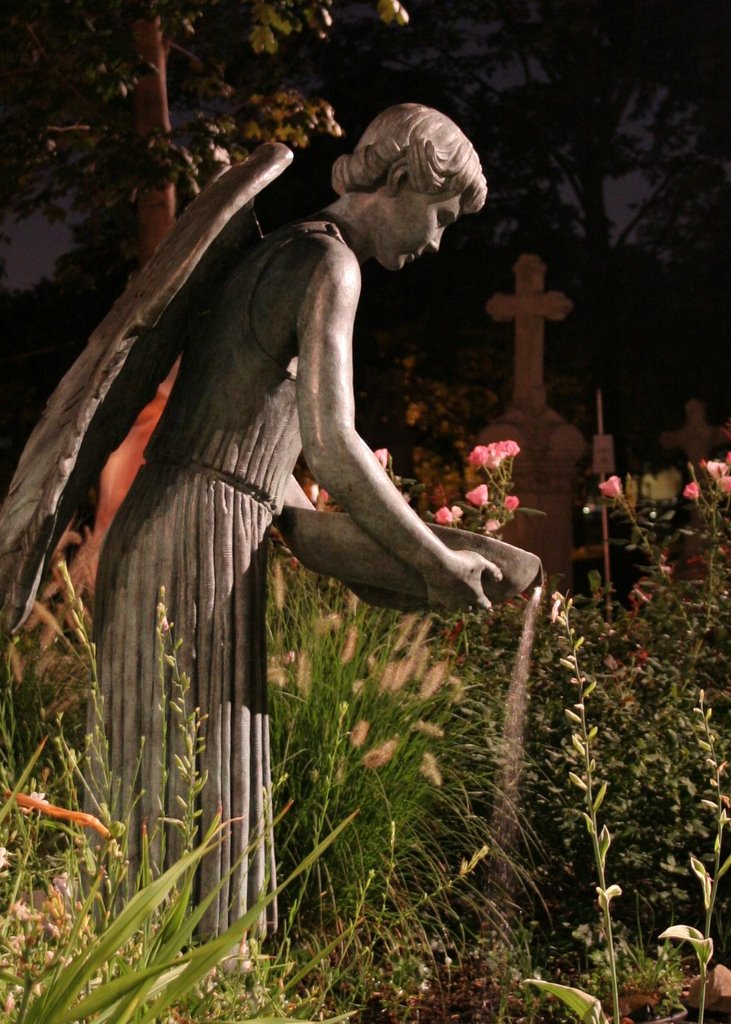
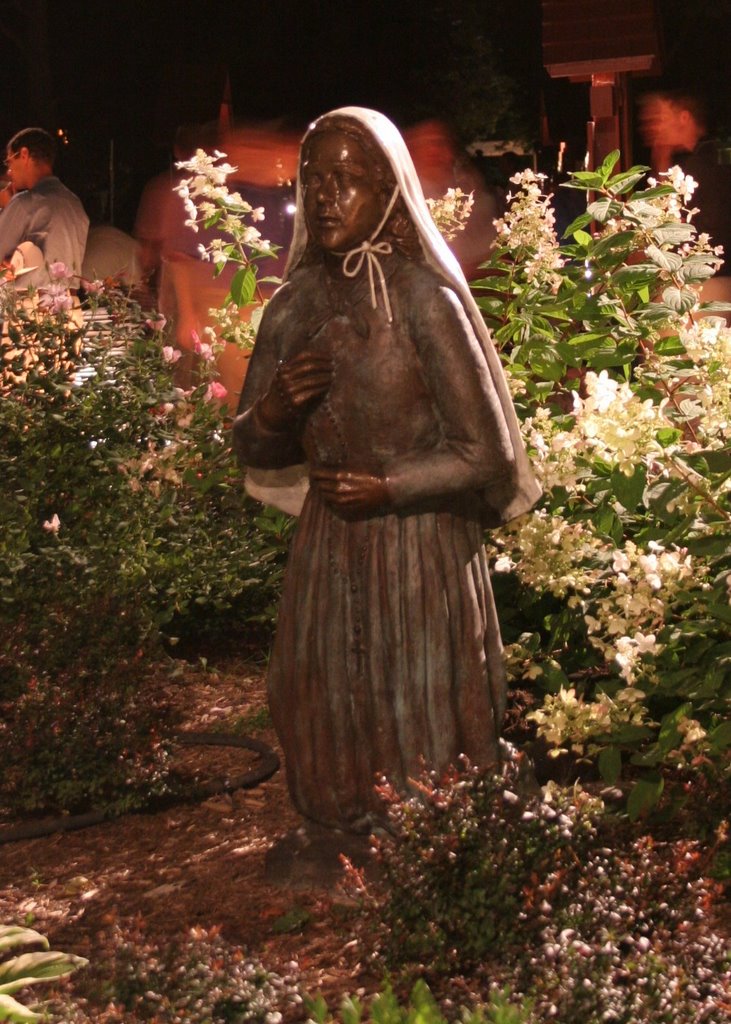
There is also a statue of Bernadette, and an Angel fountain in front of the Grotto. These were also taken at the conclusion of the August 15, 2006 evening Mass outdoors.


Click here to see 23 stunning photo posts from August 15, 2006

Click here to visit the Lourdes website.

Church approved cures attributed to the Blessed Mother at Lourdes

Thursday, February 1, 2007

March for Life: San Francisco - in Video

I received this video from reader, Andrew, along with his introduction:

The weekend before last, I and 20 others from Washington state, travelled to San Francisco for the 3rd annual Walk for Life. It was a very meaningful experience for many. I have just recently put together a video, which features Fr. Frank Pavone to start, and carries into a rather powerful message. I thought I would share it with you. You can see it here:


Thank you Andrew for sending this in. I was going to ask if anyone had photos of either event - in San Francisco or Washington DC so I could post a few. If anyone does send me some, be sure to let me know how you want photo credit to be given.

I'm still stuck in engineering releases and working very long hours. I have many more posts I want to make, but they must wait as they are more time intensive. In particular, I have received some good information from reader Javier about a religious order based in Argentina with ties here in the US and will soon be doing a profile.

I also want to continue with our series on Sacred Signs by Romano Guardini.

Hopefully, the rush on releases will soon end and things can get back to normal.

Tuesday, January 30, 2007

Back from Retreat

It was a wonderful retreat, but the hustle and bustle of daily life - especially longer work hours mandated by upcoming engineering release dates - has left me little time for blogging. Perhaps tomorrow.

I would like to bring to your attention the 2007 Opus Angelorum Retreat Schedule. Maybe they are coming to a town near you.


Until then, consider reading these, starting with a post made by Moneybags at A Catholic Life on one of my favorite confession stories - this one involving St. Philip Neri:

Saint Philip Neri once gave a lady who gossiped the following penance:

"Go to the market, buy a chicken, and pluck it on your way back here, scattering the feathers as you walk. When you give me the plucked chicken, I'll tell you the rest of your penance."

The woman was baffled did as she was told. After she handed the plucked chicken to the saint, St. Neri said, "Now that you've spread those feathers about, go pick them up."

"But, Father! It's impossible to know where they've all gone!"

"Just like the words of your gossip," he said.

Other online articles to read:

Thursday, January 25, 2007

Sacred Signs by Romano Guardini: Kneeling

Please pray for me and for all participants in the retreat given by Opus Angelorum this weekend in Holly, Michigan. Pray also for the priests who lead us in this retreat that God grace them during this time of spiritual work.

Comments will be open, but I will have "moderation" turned on. Your comments will be visible after I return and have had a chance to ensure nothing lewd has popped into this blog.

I leave you with a continuation of our current series...


Kneeling

from "Sacred Signs" by Romano Guardini, c 1956
via the EWTN online Library


WHEN a man feels proud of himself, he stands erect, draws himself to his full height, throws back his head and shoulders and says with every part of his body, I am bigger and more important than you. But when he is humble he feels his littleness, and lowers his head and shrinks into himself. He abases himself. And the greater the presence in which he stands the more deeply he abases himself; the smaller he becomes in his own eyes.


But when does our littleness so come home to us as when we stand in God's presence? He is the great God, who is today and yesterday, whose years are hundreds and thousands, who fills the
place where we are, the city, the wide world, the measureless space of the starry sky, in whose eyes the universe is less than a particle of dust, all-holy, all-pure, all-righteous, infinitely high. He is so great, I so small, so small that beside him I seem hardly to exist, so wanting am I in worth and substance. One has no need to be told that God's presence is not the place in which to stand on one's dignity. To appear less presumptuous, to be as little and low as we feel, we sink to our knees and thus sacrifice half our height; and to satisfy our hearts still further we bow down our heads, and our diminished stature speaks to God and says, Thou art the great God; I am nothing.

Therefore let not the bending of our knees be a hurried gesture, an empty form. Put meaning into it. To kneel, in the soul's intention, is to bow down before God in deepest reverence.


On entering a church, or in passing before the altar, kneel down all the way without haste or hurry, putting your heart into what you do, and let your whole attitude say, Thou art the great God. It is an act of humility, an act of truth, and everytime you kneel it will do your soul good.


This is probably one of the greatest things we can ponder today: While the invisible God took on the visible form of Man, did Our Lord ever intend the casual, buddy-like, and lukewarm relationship so easy to fall into in these times?

When we enter the church building, we first look for the Tabernacle which houses Him. Once we enter through those doors, like heaven, we should give all of our focus to Him. No other thing or person should command our attention which should be give fully to the Lord when in His house.

Restore a sense of the sacred by just being silent, humble, still and on your knees before His Majesty. When others are talking in Church remain focused. Don't kneel to make a point. Do it out of love for Him without concern for what others are doing, not doing. Don't worry about what others may think as long as your reasons for kneeling are pure.

When the noise in Church is taking it's toll on you, don't be angry. Get on your knees and ask for God's forgiveness, for "they know not what they do". It's only by the grace of God that many of us "get it" and fall into silent prayer in Church. Recall the noise that must have been around our Lord on His way to crucifixion - the conversations, people going about their business, even jeering Him. He never lashed out at them, nor was He angry. Follow the example of Jesus and offer up these sufferings experienced in noisy parishes in reparation for these offenses, and for conversion of those who do not yet understand.

If you are a priest I can tell you that I was deeply impacted by seeing priests visibly in prayer. They weren't showing off or drawing attention to themselves. Rather, they were just praying and, in essence, served as a witness of the Lord in this capacity. Witnessing them in prayer gave me an indication of Whom I should be "visiting" when in Church.

I've often wondered if the noise in our parishes before Mass would cease if our priests came out 15 minutes prior to Mass and simply knelt in prayer without saying a word, especially if the Blessed Sacrament is central. It communicates something: This is God and we should be silent before Him. The Holy Spirit can work through a priest on his knees, especially if he offers this time for the intention of pre-Mass recollection of those in attendance. Here, a priest of Opus Angelorum was on his knees for one hour - a Holy Hour for vocations. This has been going on the first Sunday of every month at Assumption Grotto.


If you have difficulty kneeling for any length of time and do not have physical limitations, know that kneeling each day for as long as you can, eventually conditions you for longer periods. When I first arrived at Assumption Grotto, I could barely kneel 5 minutes on a soft kneeler, let alone on hard floor. I recall breaking out into a sweat in those early days when I first experienced Eucharistic Prayer I - so often used at Assumption Grotto.

In time, and with persistence, I learned a simple lesson. Some of you will recall a movie called Forrest Gump in which the character, after which the movie is named, coins the expression "Stupid is as stupid does". It became one of many popular Gumpisms. Well,.....

Reverent is as reverent does.

Romano Guardini so eloquently captures this simple lesson. Our outward expression of reverence towards the Lord comes from that interior act of reverence. It is not necessary to "feel" reverence. This is a mistake. Feeling reverence in the heart is a pure grace from God. It's not so much what we do when God makes something feel right and good. It's what we do when he takes the "training wheels" off and we are not graced with such good feelings. Do we persist even when he does not give us such a gift? This is true of all prayer, as well as with kneeling.

Never follow feelings; follow faith and reason. Let's humble ourselves on our knees before the Lord.


More on Kneeling

Catholic Encyclopedia Online: Genuflection
Kneeling and Faith in the Eucharist by Regis Scanlon
Theology of Kneeling by Josef Cardinal Ratzinger
Knees to Love Christ by Bishop Thomas Olmstead

Tuesday, January 23, 2007

Sacred Signs by Romano Guardini: Hands

THE HANDS
from "Sacred Signs" by Romano Guardini, c 1956
via the EWTN online Library


EVERY part of the body is an expressive instrument of the soul. The soul does not inhabit the body as a man inhabits a house. It lives and works in each member, each fibre, and reveals itself in the body's every line, contour and movement. But the soul's chief instruments and clearest mirrors are the face and hands.

Of the face this is obviously true. But if you will watch other people (or yourself), you will notice how instantly every slightest feeling,--pleasure, surprise, suspense,--shows in the hand. A quick lifting of the hand or a flicker of the fingers say far more than words. By comparison with a language so natural and expressive the spoken word is clumsy. Next to the face, the part of the body fullest of mind is the hand. It is a hard strong tool for work, a ready weapon of attack and defence,--but also, with its delicate structure and network of innumerable nerves, it is adaptable, flexible, and highly sensitive. It is a skilful workmanlike contrivance for the soul to make herself known by. It is also an organ of receptivity for matter from outside ourselves. For when we clasp the extended hand of a stranger are we not receiving from a foreign source the confidence, pleasure, sympathy or sorrow that his hand conveys?

So it could not but be that in prayer, where the soul has so much to say to, so much to learn from, God, where she gives herself to him and receives him to herself, the hand should take on expressive forms.

When we enter into ourselves and the soul is alone with God, our hands closely interlock, finger clasped in finger, in a gesture of compression and control. It is as if we would prevent the inner current from escaping by conducting it from hand to hand and so back again to God who is within us, holding it there. It is as if we were collecting all our forces in order to keep guard over the hidden God, so that he who is mine and I who am his should be left alone together. Our hands take the same position when some dire need or pain weighs heavily on us and threatens to break out. Hand then locks in hand and the soul struggles with itself until it gets control and grows quiet again.

But when we stand in God's presence in heart-felt reverence and humility, the open hands are laid together palm against palm in sign of steadfast subjection and obedient homage, as if to say that the words we ourselves would speak are in good order, and that we are ready and attentive to hear the words of God. Or it may be a sign of inner surrender. These hands, our weapons of defence, are laid, as it were, tied and bound together between the hands of God.

In moments of jubilant thanksgiving when the soul is entirely open to God with every reserve done away with and every passage of its instrument unstopped, and it flows at the full outwards and upwards, then the hands are uplifted and spread apart with the palms up to let the river of the spirit stream out unhindered and to receive in turn the water for which it thirsts. So too when we long for God and cry out to him.

Finally when sacrifice is called for and we gather together all we are and all we have and offer ourselves to God with full consent, then we lay our arms over our breast and make with them the sign of the cross.

There is greatness and beauty in this language of the hands. The Church tells us that God has given us our hands in order that we may "carry our souls" in them. The Church is fully in earnest in the use she makes of the language of gesture. She speaks through it her inmost mind, and God gives ear to this mode of speaking.

Our hands may also indicate the goods we lack,--our unchecked impulses, our distractions, and other faults. Let us hold them as the Church directs and see to it that there is a real
correspondence between the interior and exterior attitude.

In matters such as this we are on delicate ground. We would prefer not to talk about things of this order. Something within us objects. Let us then avoid all empty and unreal talk and concentrate the more carefully on the actual doing. That is a form of speech by which the plain realities of the body say to God what its soul means and intends.

More on the book, Sacred Signs by Romano Guardini

Romano Guardini also teaches us something else through writings such as this: How to meditate. Notice how he took such a simple thing and continued to expand on it. Such progression can be the fruit of mental prayer, guided by the Holy Spirit.

But, it takes meditative quiet. If you've never tried mental prayer, just sit with your eyes closed, read a little Scripture and when something hits you, just pause and let it work within your soul.

Fr. John A. Hardon, S.J. has written on this subject. From his library of writings via The Real Presence website: All My Liberty: Chapter 10 - Vocal and Mental Prayer


Monday, January 22, 2007

January 22 - Day of Penance

Today marks the anniversary of Roe V. Wade. It was the beginning of the slaughter of innocence.

As many of you already know, there is a march in Washington. Last night, EWTN featured the vigil Mass out of the Basilica of the Immaculate Conception in Washington DC. I watched this last year and was very moved by the jam-packed church - mostly youth.

Justin Cardinal Rigali gave an excellent sermon. The procession of priests, deacons, bishops and cardinals was very moving in itself. The opening procession took 30 minutes in which traditional Catholic choral hymns were sung. I don't know how many there were, but processing two by two for 30 minutes, it seemed like there was in the hundreds.

If you were at either the vigil Mass or the morning Mass on the 22nd and took photos, send me a couple and I will post them here. Let me know how you want photo credit to be given - either a real name or a pseudoname.

Please pray for the safety of all those in attendance there in Washington. Offer your prayers and intentions this day for the unborn, for their families, for those suffering from past abortions, for reparation, and for people to come to their senses and end this butchery.

See the miracle of life in the recent National Geographic special - In the womb: Multiples. You will find images from the program there.

Visit the Priests for Life website for more pro-life resources and post-abortion assistance.

Thursday, January 18, 2007

Healing after Abortion

If you watched the EWTN interview of abortion survivor Gianna Jessen and have ever had an abortion, please know that nothing is beyond God's forgiveness, for those who seek His mercy.

Don't suffer in silence any longer - seek God's mercy!

Project Rachel
Rachel's Vineyard
Silent No More